
Hair Loss Blood Test Programs
Hair loss can stem from many causes, and identifying the root cause is the first step toward effective treatment. At Dr. PAUL Hair Clinic, we offer hair loss blood test programs starting at THB 5,900, with a free consultation included.
Hair Loss Blood Screening Test
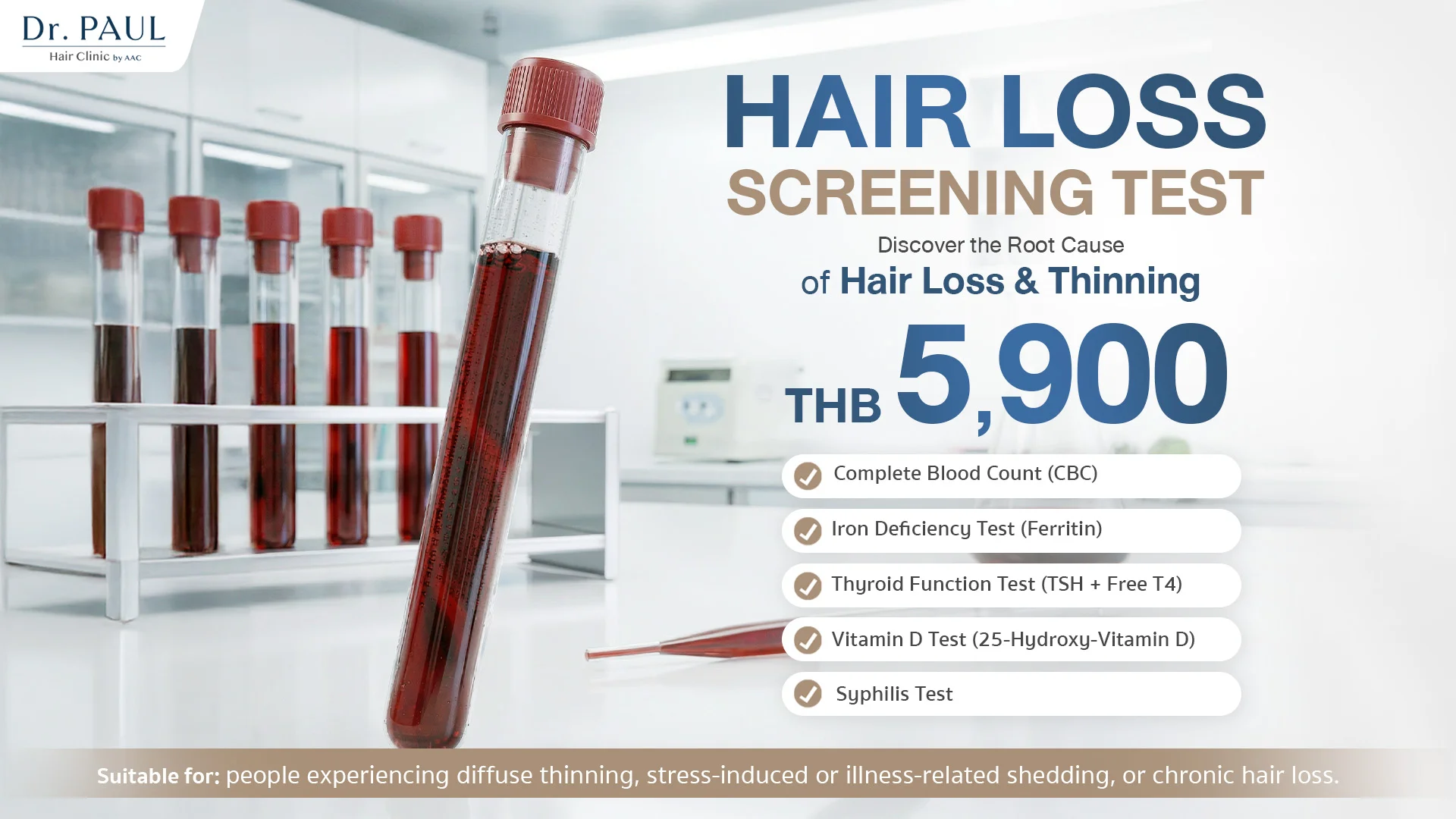
This blood screening program is designed for those experiencing diffuse hair loss, stress-induced or illness-related hair loss, or chronic hair loss. It includes five tests:
- Complete Blood Count (CBC)
- Iron Deficiency (Ferritin)
- Thyroid Hormone Levels (TSH + Free T4)
- Vitamin D Levels
- Syphilis
Blood Test for Female Pattern Hair Loss
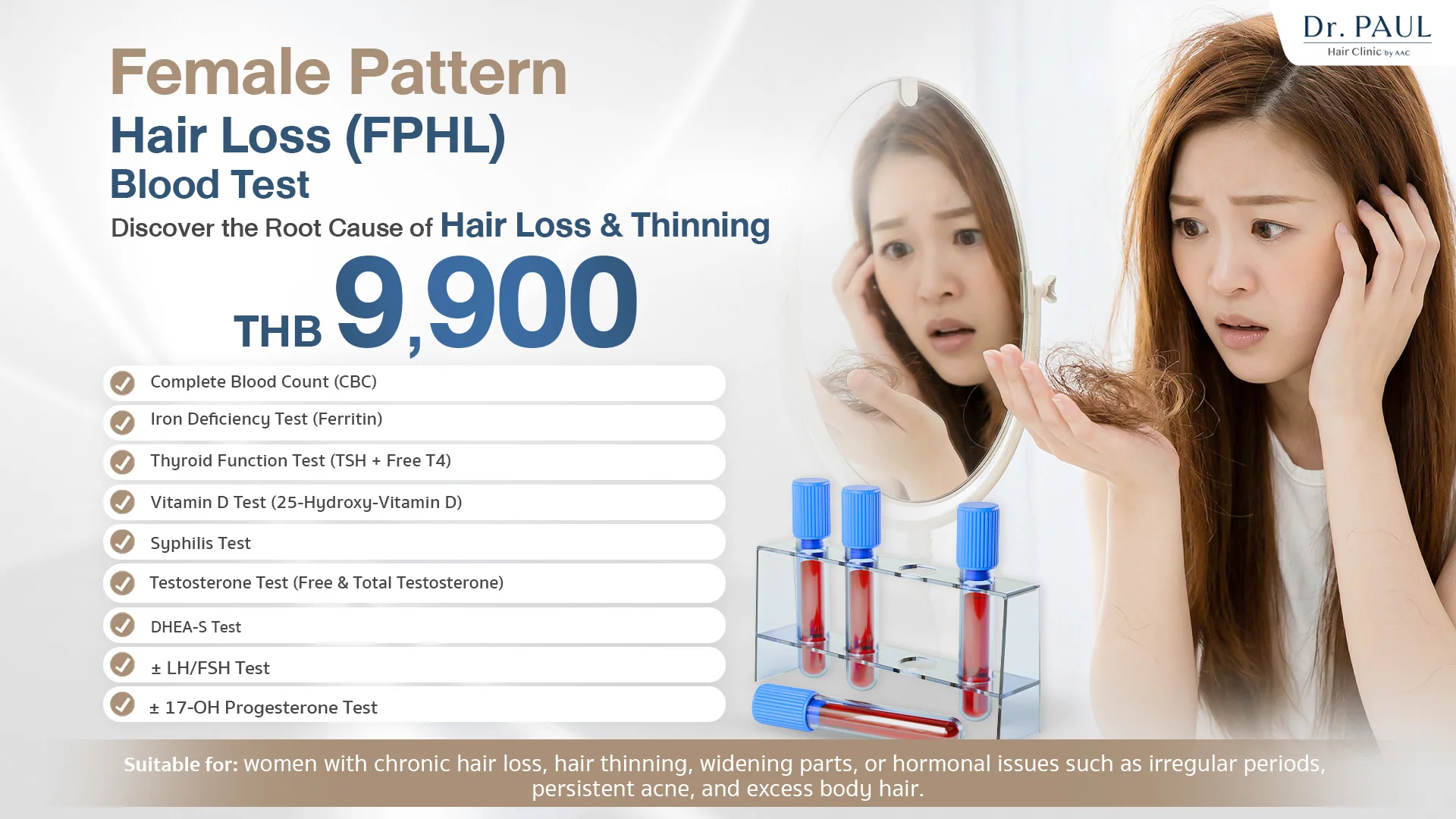
This blood test program is designed for women experiencing Female Pattern Hair Loss (FPHL), chronic hair shedding, thinning hair, a noticeably widened part, or hormonal irregularities such as irregular periods, unusual acne breakouts, or excess body hair growth. It includes nine tests:
- Complete Blood Count (CBC)
- Iron Deficiency (Ferritin)
- Thyroid Hormone Levels (TSH + Free T4)
- Vitamin D Levels
- Syphilis
- Testosterone Levels (Free/Total Testosterone)
- DHEA-S Levels
- LH/FSH Levels (if necessary)
- 17-OH Progesterone Levels (if necessary)
Blood Test for Postpartum Hair Loss
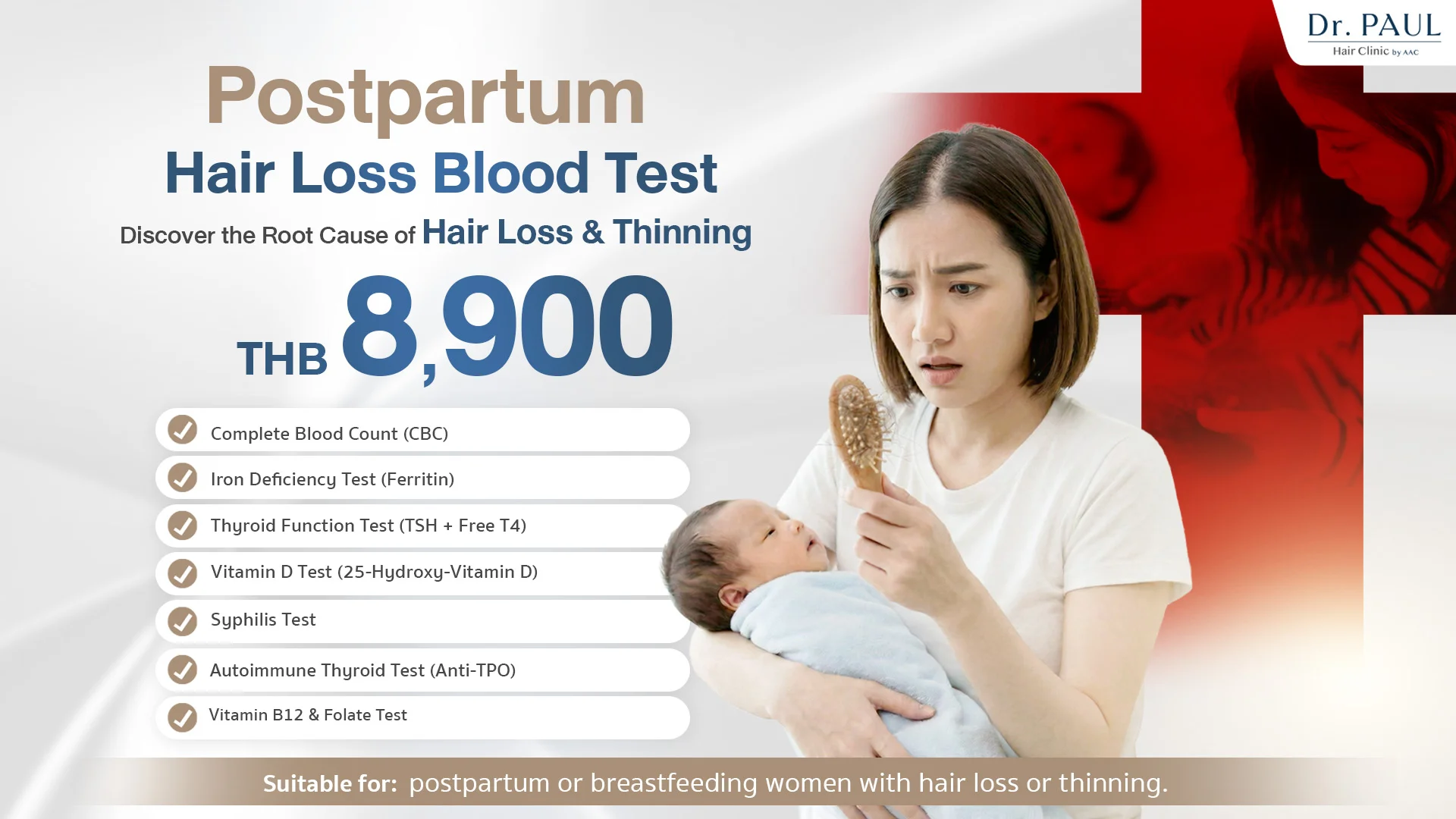
This blood test program is designed for mothers who have recently given birth or are currently breastfeeding. It includes seven tests:
- Complete Blood Count (CBC)
- Iron Deficiency (Ferritin)
- Thyroid Hormone Levels (TSH + Free T4)
- Vitamin D Levels
- Syphilis
- Anti-TPO Antibodies (Thyroid Autoimmunity)
- Vitamin B12 and Folate Levels
Blood Test for Patchy Hair Loss
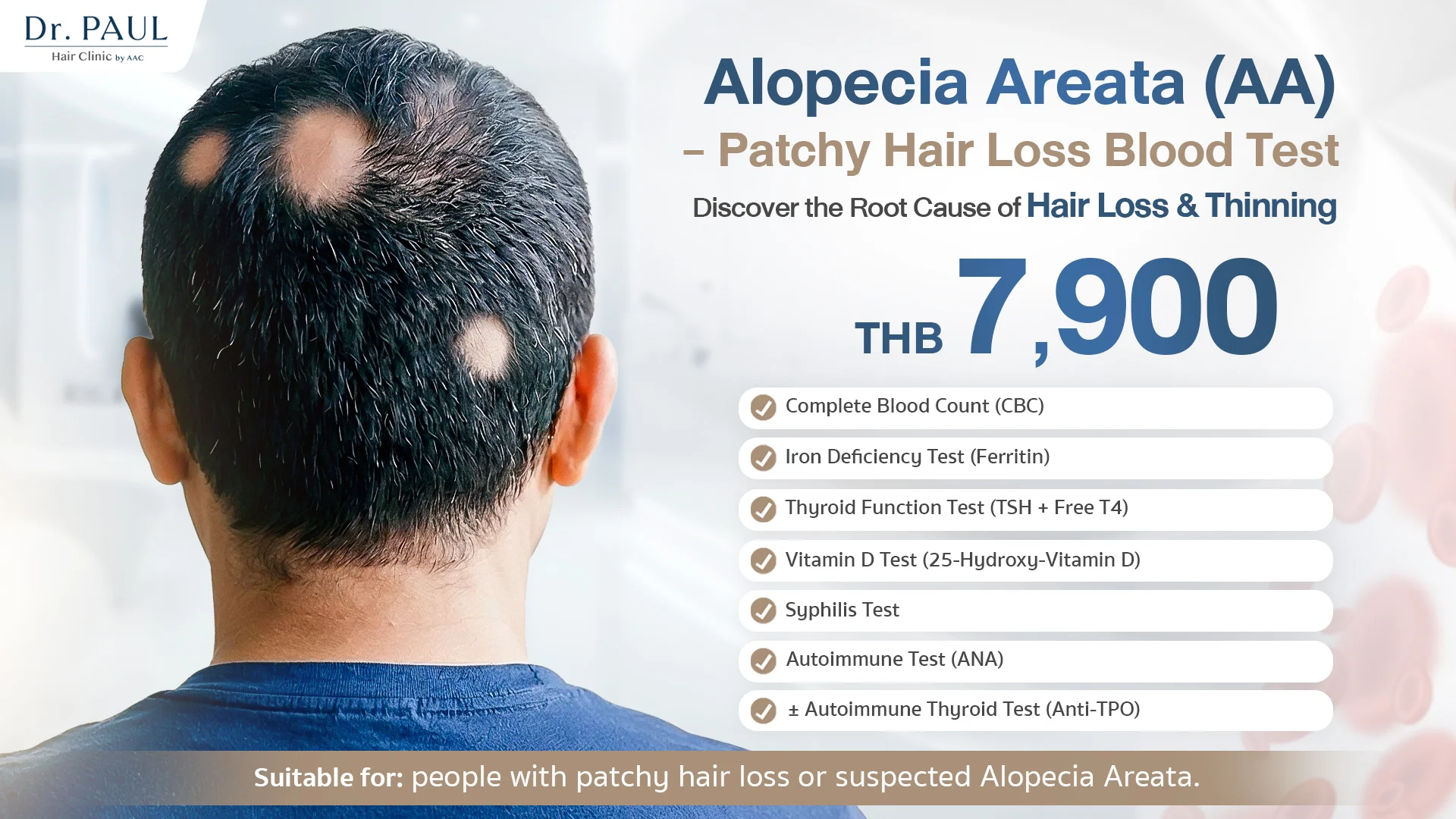
This blood test program is designed for individuals experiencing patchy hair loss or who suspect they may have Alopecia Areata (AA). It includes seven tests:
- Complete Blood Count (CBC)
- Iron Deficiency (Ferritin)
- Thyroid Hormone Levels (TSH + Free T4)
- Vitamin D Levels
- Syphilis
- Autoimmune Disease (ANA)
- Thyroid Autoimmunity (Anti-TPO Antibodies) (if necessary)
Program Comparison
Dr. PAUL Hair Clinic offers hair loss blood test programs ranging from THB 5,900 to 9,900, depending on your needs. All programs include a free consultation with our doctors.
| Test | Hair Loss Blood Screening Test | Blood Test for Female Pattern Hair Loss | Blood Test for Postpartum Hair Loss | Blood Test for Patchy Hair Loss |
|---|---|---|---|---|
| Complete Blood Count (CBC) | Yes | Yes | Yes | Yes |
| Iron Deficiency (Ferritin) | Yes | Yes | Yes | Yes |
| Thyroid Hormone Levels (TSH + Free T4) | Yes | Yes | Yes | Yes |
| Vitamin D Levels | Yes | Yes | Yes | Yes |
| Syphilis | Yes | Yes | Yes | Yes |
| Testosterone Levels (Free/Total Testosterone) | No | Yes | No | No |
| DHEA-S Levels | No | Yes | No | No |
| LH/FSH Levels | No | If necessary | No | No |
| 17-OH Progesterone Levels | No | If necessary | No | No |
| Thyroid Autoimmunity (Anti-TPO Antibodies) | No | No | Yes | If necessary |
| Vitamin B12 and Folate Levels | No | No | Yes | No |
| Autoimmune Disease (ANA) | No | No | No | Yes |
| Price | THB 5,900 | THB 9,900 | THB 8,900 | THB 7,900 |
What Is a Hair Loss Blood Test?
A hair loss blood test analyzes the blood for diseases and abnormalities that may be contributing to hair loss, such as anemia, elevated androgens, nutritional deficiencies, autoimmune conditions, and syphilis. Identifying the underlying cause is essential for an accurate diagnosis and an effective treatment plan.
Early detection and treatment of hair loss matters, because acting sooner gives you a better chance of protecting the remaining hair follicles. In some cases, this means effective treatment options are still available without the need for a hair transplant.
Who Should Consider a Hair Loss Blood Test?
A hair loss blood test may be worth considering if you have:
- Excessive hair shedding, especially if chronic (some daily loss is normal; most people shed around 50–100 strands per day)
- Overall thinning or finer hair texture
- Patchy hair loss
- A widening part line
- A receding hairline
- Previously tried hair loss treatments without improvement
- Hair loss or thinning alongside other symptoms, such as fatigue, unexplained weight changes, or irregular periods
What Tests Can Be Included in a Hair Loss Blood Test?
The tests included in a hair loss blood panel are tailored to each individual. The following are the tests that may be considered.
- Anemia: Anemia is a condition in which the body has too few or poorly functioning red blood cells, reducing the amount of oxygen delivered to hair follicles and potentially leading to hair loss. This is assessed with a complete blood count (CBC).
- Iron deficiency: Iron plays a key role in producing hemoglobin in red blood cells. A deficiency can lead to anemia, which is a known cause of hair loss.
- Folate deficiency: Folate is a vitamin essential for cell division, red blood cell production, and keratin synthesis — the structural protein that makes up the hair strand. A folate deficiency may therefore contribute to hair loss.
- Vitamin B12 deficiency: Low vitamin B12 is a common cause of megaloblastic anemia, a condition in which red blood cells become abnormally large and short-lived, impairing oxygen transport and potentially leading to hair loss.
- Vitamin D deficiency: Vitamin D plays an important role in the hair growth cycle and may also help reduce the risk of autoimmune activity targeting the hair follicles. A vitamin D deficiency may therefore contribute to hair loss.
- Syphilis: Hair loss can occur in the secondary stage of syphilis, typically around 3–12 weeks after infection, and often presents as patchy shedding. Research suggests this occurs in approximately 3–7% of cases.
- Elevated sex hormones: Elevated levels of certain sex hormones, including total testosterone, free testosterone, and DHEA-S, may indicate female pattern hair loss (FPHL).
- Elevated LH and FSH: Abnormally high levels of luteinizing hormone (LH) and follicle-stimulating hormone (FSH) may point to polycystic ovary syndrome (PCOS) or menopause, both of which can contribute to hair loss and thinning.
- Elevated 17-OH Progesterone: Elevated 17-OH progesterone may indicate congenital adrenal hyperplasia (CAH), a genetic condition that can cause hair loss. This test is particularly relevant for women, as CAH can cause androgen excess, which is a known driver of female pattern hair loss.
- Thyroid disorders: Various thyroid-related conditions, including hyperthyroidism, hypothyroidism, and autoimmune thyroid disease, can all contribute to hair loss.
- Autoimmune conditions: In people with autoimmune conditions, the immune system may attack hair follicles and the scalp, leading to hair loss.